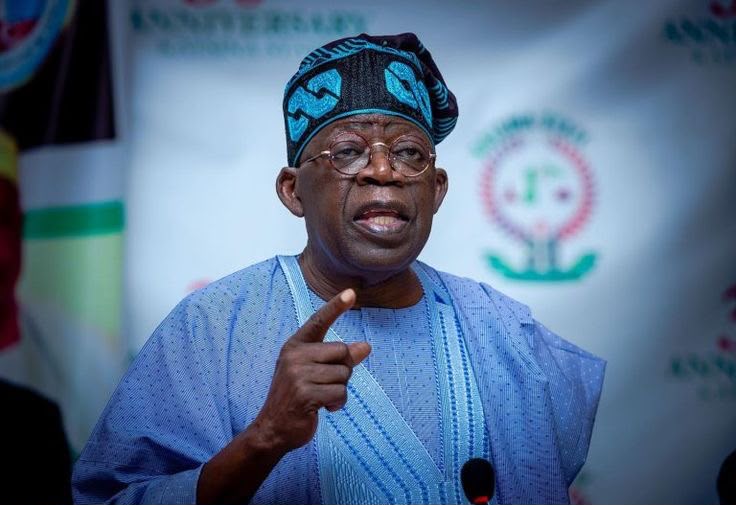
President Bola Tinubu has welcomed the World Bank’s latest report on Nigeria’s economy, citing its growth figures as evidence that his administration’s economic reforms are beginning to yield results.
In a statement issued on Sunday by his Special Adviser on Information and Strategy, Bayo Onanuga, the President said the World Bank’s October 2026 Nigeria Development Update confirmed that the economy was stabilising and moving towards sustained growth.
The report, titled Beyond the Federal Purse: How Higher Revenues Reshaped State Priorities, found that Nigeria’s real Gross Domestic Product grew by 4.2 per cent in the first half of 2026, compared with 3.9 per cent in the corresponding period of 2025.
The World Bank attributed the growth largely to the services sector, alongside a stronger contribution from agriculture. It also projected that the economy would grow by an average of 4.4 per cent between 2026 and 2028.
Tinubu said the findings supported the government’s decision to remove the petrol subsidy, unify the foreign exchange market and strengthen fiscal discipline.
The report also highlighted an increase in revenue available to state governments following the economic reforms, creating opportunities for greater investment in infrastructure and public services.
According to the World Bank, aggregate state revenues increased by approximately 93 per cent in real terms between 2023 and 2025, while expenditure rose by about 92 per cent over the same period.
Capital spending also increased, with its share of total state expenditure rising from 46 per cent to 61 per cent.
However, the Bank stressed that higher revenues must translate into better public services and improved living standards. It urged state governments to strengthen spending efficiency and accountability while prioritising investments in infrastructure, healthcare, education and other essential services.
On inflation, the report noted that the rate had declined from 27.6 per cent in January 2025 to 15.2 per cent in December 2025. However, higher global oil prices linked to the conflict in the Middle East have slowed the subsequent decline.
The World Bank expects inflation to ease gradually to about 12 per cent by 2028, provided economic stability is sustained.
Tinubu urged state governments to manage their increased revenues prudently and prioritise projects that directly improve the welfare of citizens.
He also pledged to expand targeted cash transfers, which he said had reached more than 10 million households, and accelerate the deployment of compressed natural gas (CNG).
The President acknowledged that challenges remained, particularly the high cost of food and the need to create more employment opportunities for young Nigerians.
He expressed confidence in the government’s Renewed Hope Agenda 2.0, assuring Nigerians that “the best is yet to come”.
The World Bank’s assessment comes amid continuing concerns about the cost of living and whether improvements in key economic indicators will translate into tangible benefits for households.
While the latest figures point to stronger economic growth and increased public revenues, the Bank has emphasised that sustaining reforms, improving public service delivery and creating jobs will be critical to ensuring that the gains benefit more Nigerians.
Discussion0
No comments yet
Be the first to share your thoughts on this story.