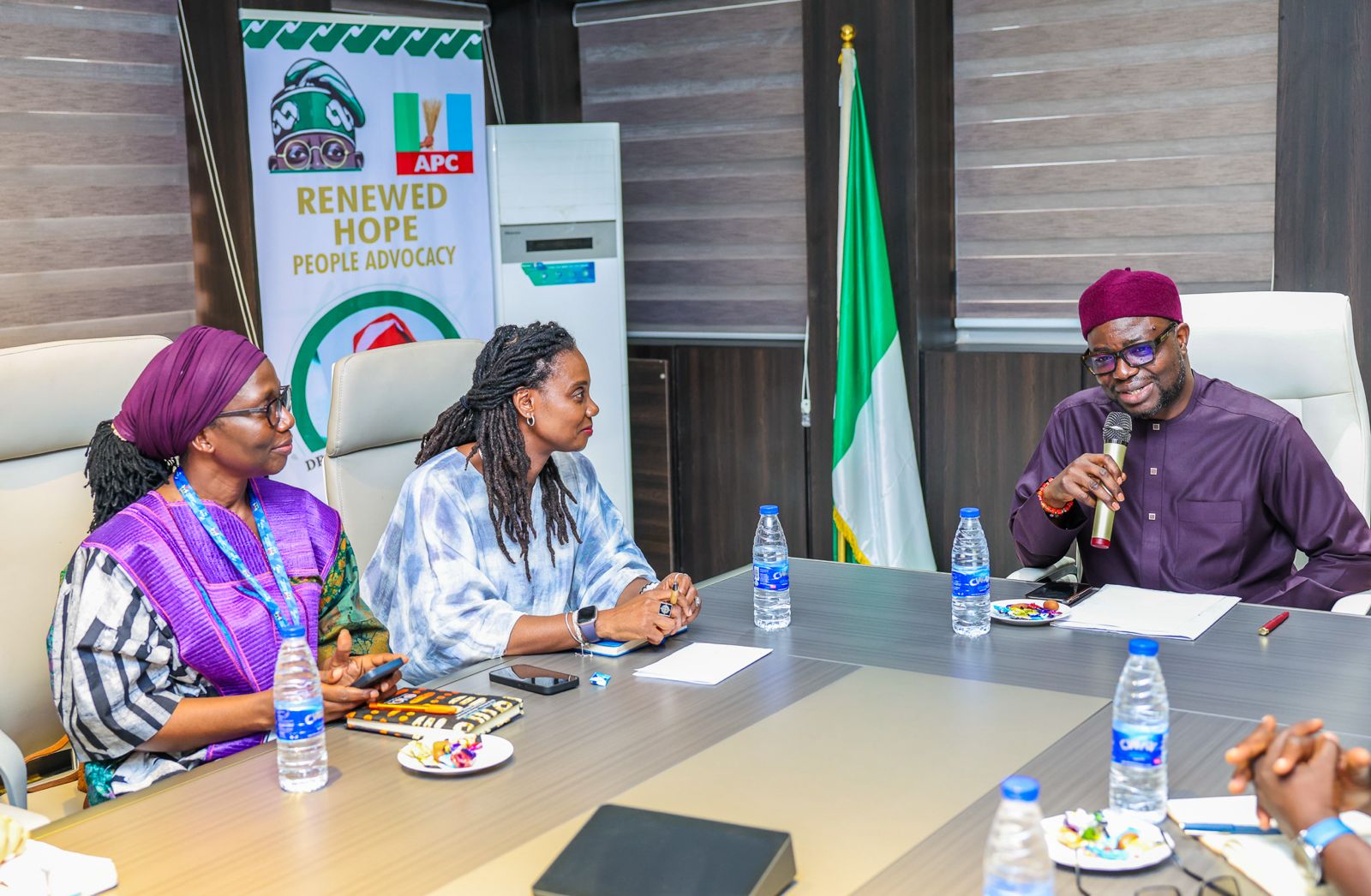
The Federal Government is pursuing reforms to Nigeria’s humanitarian system to help vulnerable populations escape poverty, recover from social crises and become productive contributors to the national economy, the Minister of Humanitarian Affairs and Poverty Reduction, Dr. Bernard M. Doro, has said.
Doro disclosed this on Monday, October 26, 2026, during a courtesy visit by a delegation from the International Organization for Migration (IOM) Nigeria, led by its Regional Director for West and Central Africa, Sylvia Ekra.
The minister said the reforms were designed to improve coordination among humanitarian interventions and poverty reduction programmes, ensuring that vulnerable people receive support that enables them to achieve lasting economic stability.
He credited President Bola Ahmed Tinubu’s Renewed Hope Agenda with providing the policy direction for the Ministry’s efforts to address poverty and improve the welfare of vulnerable Nigerians.
Doro also disclosed that the One Humanitarian, One Poverty Reduction System (OHOPRS) was awaiting approval by the Federal Executive Council (FEC).
According to him, the proposed framework would connect humanitarian assistance with social protection and poverty reduction, providing a coordinated pathway through which beneficiaries could progress from immediate relief to long-term stability and economic independence.
He explained that OHOPRS would coordinate interventions across federal and subnational governments to reduce duplication, strengthen collaboration and improve the overall impact of programmes targeting vulnerable populations.
The minister added that the Ministry was developing 20 models to identify vulnerable individuals and households and guide them through appropriate support systems towards stability and self-reliance.
FG Plans Training for 12,000 Out-of-School Children
Doro further revealed plans to train 12,000 out-of-school children using specialised learning approaches tailored to their circumstances.
He explained that some of the children might have outgrown the conventional school-age learning structure, making alternative training methods necessary to equip them with practical skills and improve their employment prospects.
Under the proposed initiative, participants would receive training and certification for specific occupations, enabling them to contribute to the economy.
The minister put the estimated cost of the programme at $20 million and disclosed that four foundations had expressed interest in supporting the initiative.
He also called on Nigerians in the diaspora to partner with the Ministry in expanding opportunities for vulnerable populations to overcome poverty.
Doro advocated the establishment of a National Economic Trust Fund, urging the Federal Government, development partners and philanthropists to contribute resources towards a sustainable funding mechanism for humanitarian assistance and poverty reduction.
IOM Pledges Support for Ministry's Initiatives
The minister commended the International Organization for Migration for its humanitarian contributions to Nigeria and congratulated the organisation on its 25 years of work in the country.
He expressed hope that the next 25 years would bring greater progress in humanitarian services through stronger collaboration between the organisation and the Ministry.
Earlier, Ekra attributed IOM’s progress in Nigeria to its longstanding partnership with the government and people of the country, particularly its collaboration with the Ministry of Humanitarian Affairs and Poverty Reduction.
She commended Doro’s vision and leadership, expressing the organisation’s willingness to support the Ministry in implementing OHOPRS and advancing plans for a humanitarian trust fund.
The engagement underscores the Ministry’s efforts to strengthen partnerships with international development organisations as it pursues a more coordinated approach to humanitarian response, social protection and poverty reduction in Nigeria.
Discussion0
No comments yet
Be the first to share your thoughts on this story.