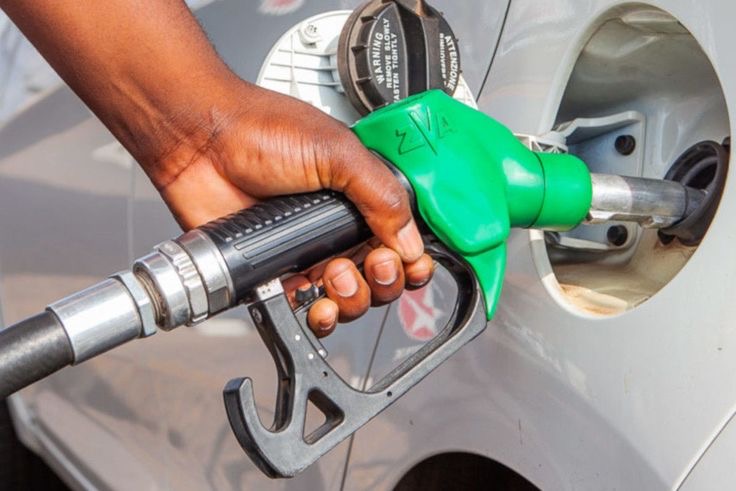
The Federal Government has announced a 30-day petrol discount at Nigerian National Petroleum Company Limited (NNPC Ltd) filling stations and is negotiating a ceiling of ₦1,350 per litre on petrol landing costs as part of efforts to cushion the impact of rising fuel prices on households and businesses.
The Minister of Finance and Coordinating Minister of the Economy, Taiwo Oyedele, disclosed this on Thursday, October 8, 2026, during a press briefing in Abuja on fuel prices and the government’s position on petrol subsidy.
Oyedele said existing interventions had not sufficiently eased the economic pressure arising from higher fuel and transportation costs, prompting the government to introduce additional measures aimed at improving price stability.
He explained that the proposed ₦1,350 ceiling applies to the cost of petrol at the ex-gantry level, rather than the retail price at filling stations. Consequently, pump prices may continue to vary depending on prevailing market conditions and other cost components.
Under the proposed price modulation mechanism, the ceiling would be reviewed monthly, with the figures published to promote transparency. Where costs exceed the approved threshold, refiners and importers would initially absorb the difference and recover it when market conditions become more favourable.
Oyedele maintained that the arrangement should not be regarded as a subsidy or direct price control, but as a mechanism for moderating price fluctuations over time.
He illustrated the policy’s objective by saying, “₦1,400 a litre today and ₦1,400 a litre tomorrow is better than ₦1,500 a litre today and ₦1,300 a litre tomorrow.”
NNPC Announces ₦66 Per Litre Discount
In a related development, NNPC Ltd has announced a discount of ₦66 per litre for customers who purchase petrol at its filling stations nationwide and make payments through the NNPC Fuel App.
The 30-day offer is expected to provide temporary relief to motorists and other petrol consumers amid persistent concerns over the rising cost of transportation and essential goods.
The government also plans to introduce forward crude oil sales to domestic refineries at fixed prices for specified periods. Oyedele cited a possible arrangement under which crude oil could be sold at $80 per barrel for six months, allowing refiners to plan their operations more effectively and potentially improving price predictability.
Other measures include investment in a National Strategic Fuel Reserve to strengthen the country’s preparedness for future energy supply disruptions, as well as efforts to address taxes and levies contributing to higher fuel and logistics costs.
FG Rules Out Return to Fuel Subsidy
Despite the proposed interventions, Oyedele ruled out a return to the pre-reform petrol subsidy regime, citing its potential financial implications for the country.
According to the minister, Nigeria consumes approximately 50 million litres of petrol daily, making a return to the former pricing arrangement prohibitively expensive.
He estimated that restoring the previous subsidised price could cost more than ₦20 trillion annually and potentially put further pressure on the naira, with the exchange rate possibly moving towards ₦3,000 to the dollar.
He added that even a proposed pump price of ₦500 per litre could require more than ₦16 trillion annually, an amount he said was comparable to nearly the entire sum shared among the federal, state and local governments through the Federation Account in 2025.
Oyedele attributed the recent increase in petrol prices to the ongoing Gulf conflict, which he said had entered its eighth month. He noted that petrol sold for approximately ₦830 per litre before the conflict, when crude oil traded at around $70 per barrel, compared with current average petrol prices of about ₦1,400 per litre and Brent crude prices above $100 per barrel.
NLC Issues Two-Week Ultimatum
The government’s announcement comes amid mounting pressure from organised labour over the cost of living and the impact of rising fuel prices on workers.
The Nigeria Labour Congress (NLC), following a joint meeting of its National Executive Council and Central Working Committee in Abuja on Wednesday, October 7, issued a two-week ultimatum to the Federal Government, effective Friday, October 9, 2026.
The labour union is demanding a reduction in petrol prices to the level prevailing when the current national minimum wage was signed into law in 2024. It is also calling for the renegotiation of the minimum wage to commence before the end of October.
The NLC’s demands reflect continuing concerns about the erosion of workers’ purchasing power as transportation, food and other essential expenses rise.
Atiku Rejects Temporary Discount
Former Vice President Atiku Abubakar has also criticised the government’s 30-day discount initiative, describing it as a temporary political measure that does not adequately address the hardship associated with high petrol prices.
His criticism adds to the debate over whether short-term discounts and proposed price-stabilisation measures can provide meaningful relief without a broader reduction in the cost of fuel.
With the NLC’s ultimatum now in effect, attention will turn to the Federal Government’s response to labour’s demands and whether the newly announced measures will be sufficient to ease public concerns before the deadline expires.
For millions of Nigerians grappling with rising living costs, the central question remains whether the interventions will translate into sustained relief at the pump and a reduction in the wider cost of living.
Discussion0
No comments yet
Be the first to share your thoughts on this story.