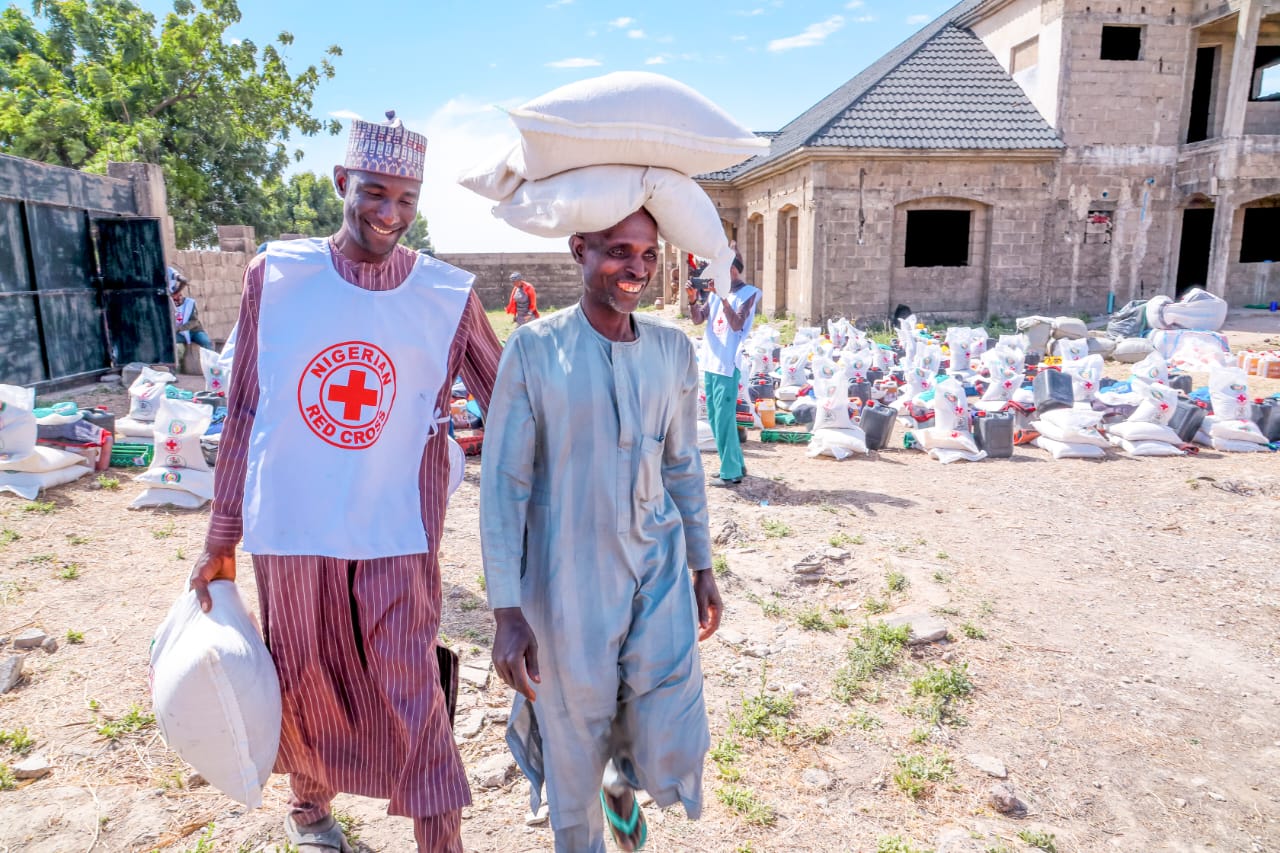
For thousands of families in Bauchi State, the 2024 floods took away more than their homes. Farms were damaged, food stores were lost, and families were left struggling to recover. Months later, 1,000 affected households received assistance through an emergency relief programme supported by the Economic Community of West African States (ECOWAS).
The ECOWAS Emergency Flood Response was launched on December 15, 2024, by the ECOWAS Commission in collaboration with the Federal Ministry of Humanitarian Affairs and Poverty Reduction, the Ministry of Foreign Affairs and the Nigerian Red Cross Society. The distribution continued until early January 2025, reaching families in Katagum, Jama'are, Zaki, Gamawa, Giade and Kirfi Local Government Areas.
The programme was valued at $200,000. Each household received 25kg of rice, 15kg of beans, 15kg of garri, five litres of vegetable oil, five litres of palm oil and ₦75,000 in cash.
The Bauchi State Government and the Nigerian Red Cross Society worked together to identify and verify the households most in need, helping to direct the assistance to families affected by the disaster.
Photographs from the distribution in Gamawa showed rows of food supplies, cooking oil, mats, blankets and buckets prepared for distribution, while Nigerian Red Cross volunteers assisted with the handover to beneficiaries.
But the scale of the disaster went far beyond the households reached by the intervention. At the final distribution exercise, the president of the Nigerian Red Cross Society, Prince Oluyemisi Adeaga, said the 2024 floods had displaced 85,000 people in Bauchi State.
Speaking at the close of the programme on behalf of the president of the ECOWAS Commission, the Director of Humanitarian and Social Affairs, Dr Sintiki Tarfa-Ugbe, said the assistance was intended to provide relief to affected families, not replace everything they had lost. She urged beneficiaries to make good use of the relief items and invest the cash assistance wisely.
For families rebuilding their lives after a disaster, food supplies and cash can help meet immediate needs. But the losses caused by flooding often extend much further, affecting livelihoods, shelter and the ability of households to recover.
The ECOWAS intervention offered support at a difficult time for affected families. It also showed how regional cooperation can help member states respond to humanitarian emergencies. Yet, as with any relief programme, the assistance provided was only one part of the longer road to recovery.
Disclosure: The writer reports on the Federal Ministry of Humanitarian Affairs and Poverty Reduction for Frontline Daily. The writer also reports on National and International stories for Frontline Daily. Beneficiaries could not be reached for this report. The information is drawn from published ECOWAS statements and media reports of the distribution exercise.
Photo credit: Akinwale Sunday/Federal Ministry of Humanitarian Affairs and Poverty Reduction. Used with permission.
Sources: ECOWAS press release, 14 January 2025; Daily Trust, 9 January 2025; News Ghana, 11 January 2025; Metoric Post, 10 January 2025.
Discussion2
That was great!
jokes apart!! Good news like this isn't talked about a lot