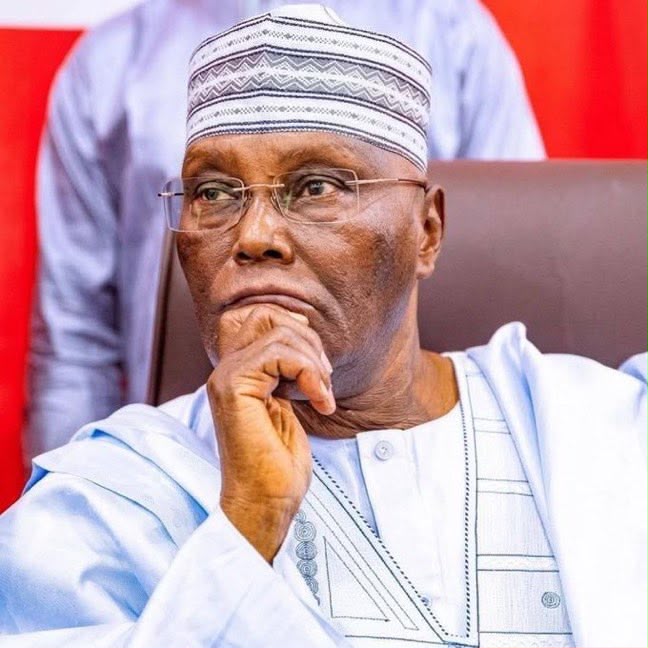
Former Vice President and African Democratic Congress (ADC) presidential candidate, Atiku Abubakar, has faulted President Bola Tinubu’s declaration that Nigeria has entered an “age of prosperity”, saying millions of Nigerians continue to struggle with rising living costs.
Atiku made the remarks on Thursday, October 1, 2026, in a State of the Nation address delivered at the ADC national headquarters in Abuja to mark Nigeria’s 66th Independence anniversary.
His address came hours after President Tinubu’s Independence Day broadcast, in which the President said the emergency phase of his economic reforms was over and that the country was entering an era of shared prosperity.
Reacting to the President’s claim, Atiku asked: “Bola, where is this prosperity?”
He argued that while a president could announce a new chapter in a speech, such a declaration could not immediately translate into food on a family’s table or more money in workers’ pockets.
Atiku said Tinubu’s address focused heavily on what the government planned to do in areas such as agriculture, electricity, job creation and reducing prices, despite being more than three years into the administration.
He also questioned the President’s promise of lower transport fares from October 1, asking which routes had actually become cheaper on the day the promise was expected to take effect. He called for the government to publish the routes affected, previous fares, new fares and the number of beneficiaries.
The ADC candidate also criticised the removal of the petrol subsidy, arguing that it was implemented without adequate protection for families who would bear the resulting economic shock.
He disputed the suggestion that Nigerians had collectively taken difficult economic decisions with the government, saying the decisions were made without adequate participation by citizens.
On the cost of living, Atiku cited increases in the prices of basic commodities. He said an egg that cost about ₦88 in April 2023 had risen to about ₦261 by May 2026, while a sliced loaf of bread that sold for about ₦500 had risen to about ₦2,000, despite the latter being smaller.
He also compared the purchasing power of workers under the old and current minimum wages, saying a ₦30,000 minimum wage in April 2023 could buy about 118 litres of petrol, while the ₦70,000 minimum wage could buy only about 50 litres at current prices.
Atiku further raised concerns about Nigeria’s public debt, citing a figure of ₦166.79 trillion as of June 2026, and criticised the extension of the implementation period of the 2025 budget into 2026.
He said many Nigerians were skipping meals, delaying medical treatment and borrowing money to survive until payday, arguing that economic growth and falling inflation figures should ultimately translate into improved living conditions.
Atiku also linked economic hardship to insecurity, saying families remained concerned about attacks, kidnappings and ransom demands.
He concluded by arguing that “a speech about prosperity is not prosperity”, while reiterating his call for President Tinubu to leave office.
Discussion0
No comments yet
Be the first to share your thoughts on this story.