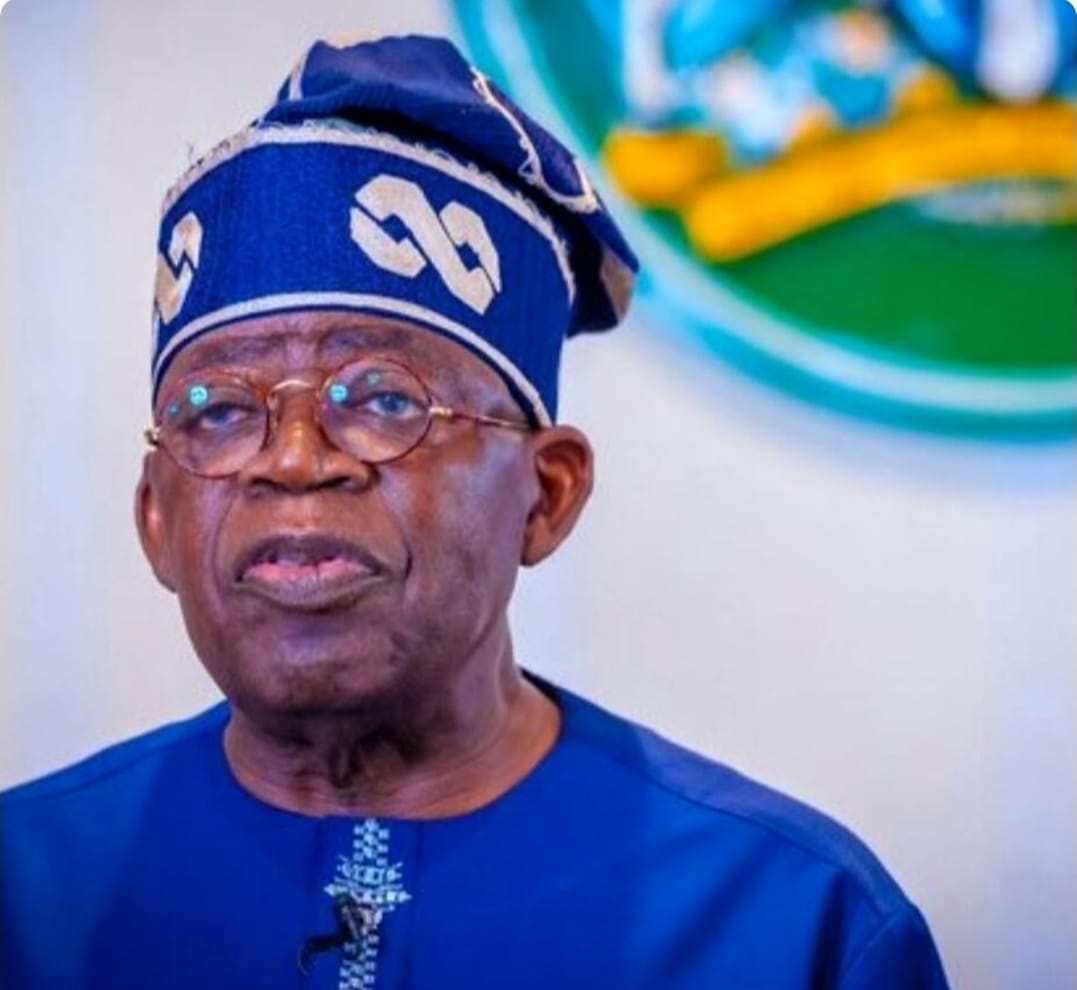
President Bola Tinubu has defended his administration's plan to secure fresh external loans, arguing that government borrowing should be assessed by the economic value it creates rather than the amount raised, amid growing criticism from organised labour and opposition figures.
In an essay titled "From Reforms to Delivery: Our Infrastructure Investment and Growth Strategy," published on Thursday through his spokesman, Bayo Onanuga, the President maintained that borrowing should be tied to investments capable of expanding the economy, creating jobs and improving infrastructure.
"The real question is not how much we borrow, but what we build, what value we create and what future we leave behind," Tinubu said.
The President's defence comes days after he requested National Assembly approval for a supplementary external borrowing plan of $20.517 billion and €1.045 billion to finance projects and programmes under the 2026–2027 borrowing plan.
The request was conveyed in a letter read by Senate President Godswill Akpabio during Tuesday's plenary session and subsequently referred to the relevant Senate committees for consideration.
Tinubu identified the Lagos-Calabar Coastal Highway, Sokoto-Badagry Superhighway, Trans-Sahara Superhighway, electricity grid upgrades and the modernisation of commercial ports in Lagos among the major infrastructure projects expected to benefit from the proposed investments.
According to the President, the Lagos-Calabar Coastal Highway alone could reduce logistics costs along its corridor by between 15 and 20 per cent and generate approximately 100,000 direct jobs.
He argued that Nigeria could not achieve its ambition of building a $1 trillion economy by 2030 without investing in infrastructure capable of supporting a significantly larger and more productive economy.
To support his position, Tinubu cited real GDP growth of 4.43 per cent in the second quarter of 2026, a decline in headline inflation to 14.63 per cent in September from 20.98 per cent a year earlier, and gross external reserves of $55.1 billion as of October 9.
He also said his administration was shifting away from borrowing to address short-term fiscal pressures towards long-term investments expected to generate economic returns, adding that the repayment periods for the loans would be aligned with the useful lives of the assets being financed.
However, the Nigeria Labour Congress (NLC) has questioned the justification for further borrowing, particularly following the Federal Government's claims of increased revenue after the removal of the petrol subsidy.
Speaking on Channels Television's The Morning Brief on Thursday, NLC President Joe Ajaero questioned why the government continued to seek external loans despite the additional revenue generated from the removal of the subsidy.
Ajaero also questioned the government's revenue projections, noting that the 2026 budget was based on a crude oil benchmark of $70 per barrel, while international oil prices had risen above $100.
Although he acknowledged that the NLC lacked the constitutional authority to approve or reject the borrowing request, he urged Nigerians and relevant institutions to demand accountability, pointing out that the National Assembly had the power to reject the proposal.
Opposition figures have also challenged the administration over its borrowing strategy.
Peter Obi, presidential candidate of the Nigeria Democratic Congress (NDC), criticised the government's borrowing during a town hall meeting in Abakaliki, Ebonyi State.
Obi questioned the administration's record of borrowing over the past three years and challenged Tinubu to explain how the funds had been utilised.
Similarly, Paul Ibe, media aide to former Vice President Atiku Abubakar, called on the Federal Government to publish a project-by-project breakdown of its borrowing, alongside a comprehensive repayment schedule.
The NDC's campaign council also demanded the publication of a full register of external loans obtained by the administration since May 2023.
Meanwhile, Vice President Kashim Shettima, represented by his Special Adviser on Economic Affairs, Tope Fasua, urged the government to communicate its economic reforms more effectively and present verifiable results to Nigerians.
The debate over the proposed borrowing has renewed questions about Nigeria's debt management, the transparency of public spending and the government's ability to demonstrate measurable returns from loans obtained in the name of national development.
Discussion0
No comments yet
Be the first to share your thoughts on this story.