By Ene Mary McDickson, Correspondent, Frontline Daily | September 23, 2026
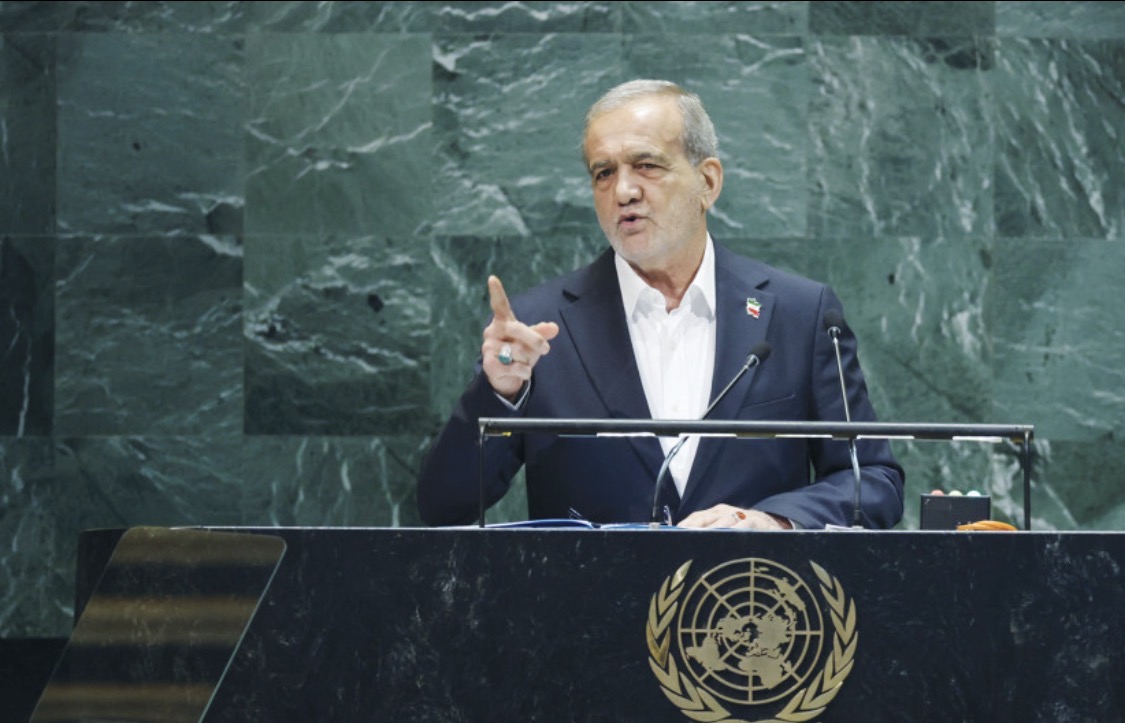
President Masoud Pezeshkian told the United Nations General Assembly on Wednesday that Iran would not "bend at the knee" to pressure from Washington, delivering his first address to the world body since the United States and Israel launched their war against Iran in February.
The US delegation walked out of the chamber as Pezeshkian began speaking.
Addressing world leaders in New York, the Iranian president defended Tehran's restrictions on the Strait of Hormuz and warned that sanctions and continued pressure from Washington would only stiffen Iranian resistance. "The resistance of the Iranian people will only increase in the face of sanctions, increased pressure, increased bullying," he said, referring to US President Donald Trump.
Pezeshkian insisted Iran had not started the conflict and remained open to diplomacy despite months of fighting. "Iran has never ever been an aggressor, has never started a war and has always shown her commitment to the negotiating table," he said. "They imposed the war on us, but we proved that we're not afraid of fighting."
He also rejected accusations from Washington that Tehran had engaged in terrorism, describing Iran instead as a victim, and cited the killing of former Supreme Leader Ayatollah Ali Khamenei and a strike on a school during the war.
The Strait of Hormuz, through which a significant share of global oil and gas supplies normally passes, remains central to efforts to end the conflict. Iranian officials say the waterway could reopen within seven days if Washington eases military pressure and lifts its naval blockade of Iranian ports.
The war began on 28 February 2026, when the United States and Israel struck Iranian nuclear and military infrastructure, killing Khamenei. A Pakistan-mediated ceasefire and a June memorandum of understanding halted large-scale fighting, but both sides have continued trading strikes over alleged violations, leaving a durable settlement elusive. Trump has said he is weighing a "big decision" on whether to resume large-scale attacks, even as he has claimed Iran is "very keen" to reach an agreement.
Tehran has repeated its long-standing conditions for restarting talks with Washington: an end to fighting on all fronts, the unfreezing of Iranian funds, and the lifting of the US naval blockade.
Discussion0
No comments yet
Be the first to share your thoughts on this story.