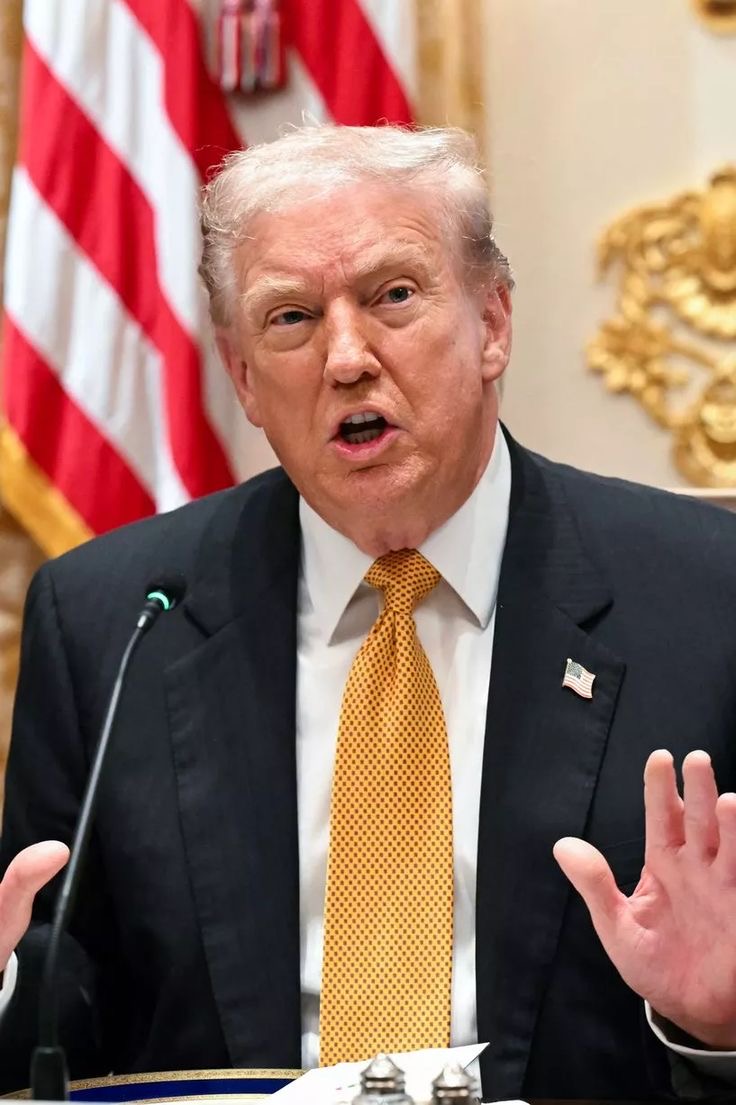
US President Donald Trump has said he is highly unlikely to order renewed military strikes on Iran if negotiations to end the conflict make progress, even as reports of attacks on shipping continue in and around the Strait of Hormuz.
Speaking in a telephone interview with CNN on Sunday, November 8, Trump said any decision to resume military action would depend on whether Tehran signs what he described as a "very strong agreement".
He repeated the phrase "highly unlikely" several times, while maintaining that he would authorise further attacks if necessary.
Trump also said the United States had identified potential infrastructure targets inside Iran, including power plants and 38 bridges, which he claimed American forces could destroy "in literally one hour".
He further claimed that Iran's military capabilities had been severely weakened and that its economy was under considerable strain following months of conflict and US military pressure.
Later on Sunday, Trump announced on Truth Social that "Task Force Iron Gate is in full force and effect" in Iran.
The US Central Command (CENTCOM) had announced the establishment of the task force on Saturday, November 7, under its commander, Admiral Brad Cooper. Comprising approximately 20 military and civilian personnel and based in Tampa, Florida, the unit is designed to work with other US government agencies to restrict the movement of advanced weapons systems, dual-use technologies, sanctioned materials and other prohibited shipments across Iran's land borders and the Caspian Sea.
The initiative expands Washington's efforts to restrict Iran's supply and trade routes beyond the existing naval blockade of Iranian ports, which was announced in July. CENTCOM said the maritime restrictions had prevented Iran from exporting more than $25 billion in crude oil.
Tehran has criticised the new initiative, dismissing it as another attempt by Washington to increase economic pressure on the country.
Trump's remarks come amid mounting political pressure over the war, which began in February 2026, following significant Republican losses in the US midterm elections held on Tuesday, November 3.
Vice President JD Vance said on Wednesday, November 4, that "the reason we lost is the war", while Trump has also acknowledged that the conflict contributed to the Republican Party's electoral setback.
The president had previously indicated that major military operations could resume after the midterm elections. However, there has been no indication of a return to a large-scale US military campaign.
Meanwhile, tensions remain high in the Strait of Hormuz, a critical international shipping route through which a significant share of global energy supplies passes. Both Washington and Tehran have reported incidents involving commercial shipping, raising concerns about further disruption to international trade and energy markets.
Iranian media suggested that explosions heard in southern Iran on Saturday, November 7, were connected to the country's own military activities rather than fresh US strikes. Iranian officials have not confirmed reports of renewed missile attacks.
Although Trump's latest remarks suggest a preference for a negotiated outcome, his warning about the identified infrastructure targets underscores the continued possibility of military escalation if diplomatic efforts fail.
Discussion0
No comments yet
Be the first to share your thoughts on this story.