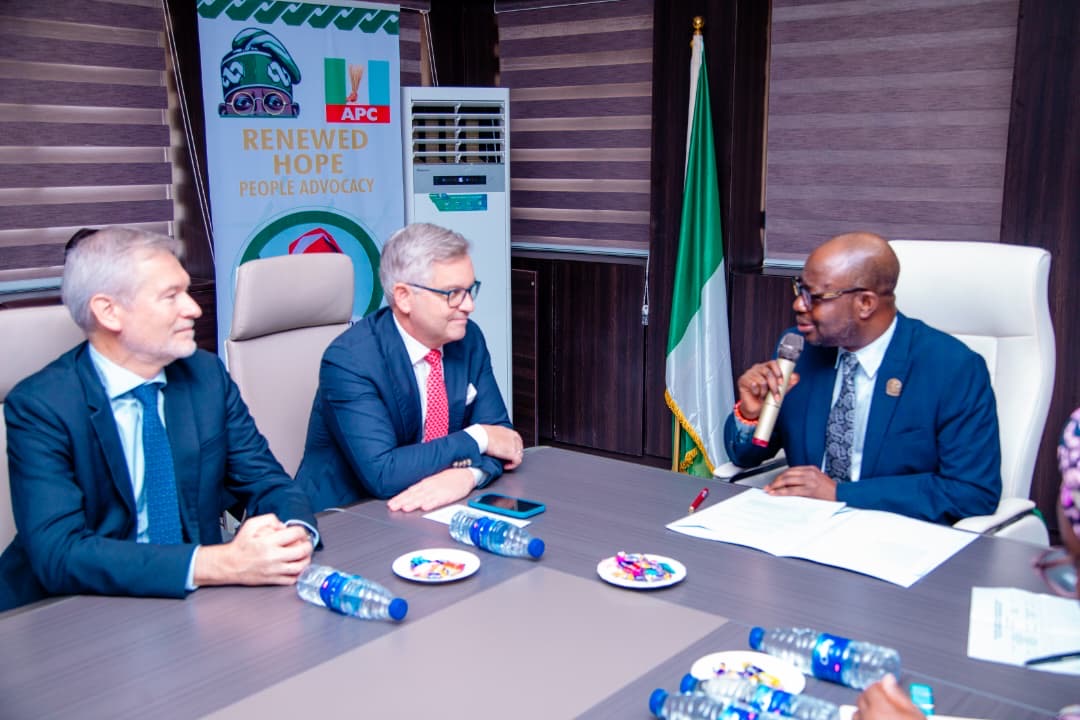
The Minister of Humanitarian Affairs and Poverty Reduction, Dr Bernard M. Doro, has called for stronger cooperation between Nigeria and the European Union (EU) to address the root causes of irregular migration, particularly poverty, unemployment, insecurity and humanitarian challenges.
He made the call on Tuesday, 10 November 2026, when he received an EU delegation led by the European Commissioner for Internal Affairs and Migration, Magnus Brunner, on a courtesy visit to his office in Abuja.
Dr Doro said the partnership should go beyond migration management to address the economic and social conditions that push people to leave their communities in search of better opportunities. Migration, he said, should be a choice backed by access to legitimate opportunities, not a desperate response to poverty, insecurity or lack of prospects.
He highlighted the Federal Government's commitment to poverty reduction, youth empowerment and human capital development, stressing the need to equip Nigerians with digital, technical and vocational skills for jobs at home and abroad. He also called for more investment in skills development and structured labour mobility programmes that would create legal pathways for Nigerians seeking work abroad while meeting labour demands in destination countries.
On humanitarian assistance, the Minister acknowledged the EU's support for internally displaced persons, particularly in the North-West. He urged greater attention to emerging needs in the North-Central region, especially Benue State, which continues to host a significant number of displaced persons.
According to him, stronger institutional cooperation, targeted interventions and sustained support would help Nigeria address its humanitarian challenges, reduce poverty and create conditions for safe, orderly and mutually beneficial migration.
In his remarks, Commissioner Brunner reaffirmed the EU's commitment to a comprehensive and balanced partnership with Nigeria, naming migration management, security, trade and the reintegration of returning migrants as key areas of cooperation.
He described the planned signing of a readmission agreement with Nigeria's Ministry of Foreign Affairs as an important step in strengthening bilateral engagement. He also pointed to ongoing joint efforts to combat human trafficking and migrant smuggling, improve the reintegration of returnees and explore other areas of mutual interest.
Earlier, the Permanent Secretary of the Ministry, Mr Olubunmi Olusanya, welcomed the delegation on behalf of the Minister and the entire staff. He expressed confidence that the engagement would lead to constructive discussions and strengthen relations between Nigeria and the EU, particularly on migration and its associated challenges.
The meeting was attended by Directors of the Ministry, EU officials and the EU Ambassador to Nigeria, Gautier Mignot.
Discussion0
No comments yet
Be the first to share your thoughts on this story.