By Ene Mary McDickson, Correspondent, Frontline Daily | September 24, 2026
Nigeria has used its platform at the United Nations to press for a world order that works for developing nations — from how artificial intelligence is governed to who sits at the Security Council table.
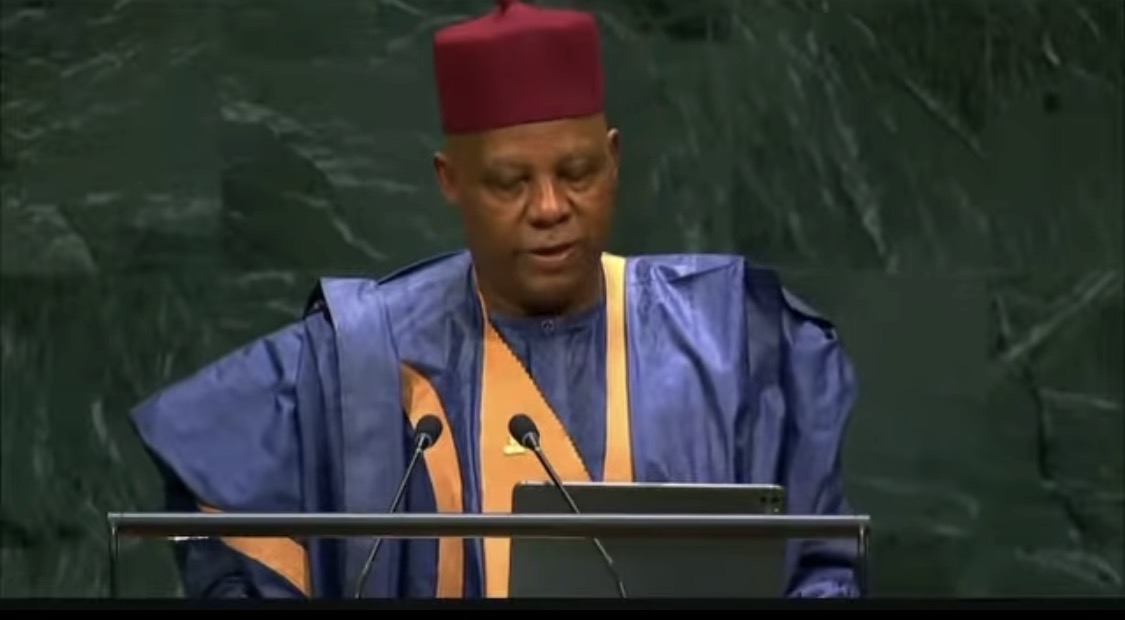
Vice President Kashim Shettima delivered President Bola Tinubu's national statement at the General Debate of the 81st Session of the UN General Assembly in New York on Thursday, 24 September 2026, addressing a wide sweep of global concerns under the Assembly's theme, "Restoring Trust, Managing Transformation: A United Nations That Delivers For All."
On artificial intelligence, Shettima argued that the technology's impact depends entirely on human intent, comparing it to a knife that can save a life in a surgeon's hands or take one in an assailant's, according to Naija News. He said Nigeria refuses to let fear dictate its technological future, noting that AI could either be deployed to wage war or used to transform healthcare, education, agriculture, governance and economic productivity. He pointed to the country's ongoing investment in digital public infrastructure, broadband connectivity and technology entrepreneurship, and invited the international community to work with Nigeria's young innovators to steer AI towards progress rather than harm.
On UN Security Council reform, the Vice President renewed a demand Nigeria first raised at last year's session: at least two permanent African seats, with full voting rights including the veto. He argued that the Council's 1945 power structure no longer reflects today's world, and that Africa cannot keep shaping the Council's agenda while remaining locked out of permanent membership, The Whistler reports.
On security cooperation, Shettima said no country, however strong its defences, can fully protect itself from threats that cross borders. He called for deeper intelligence-sharing among nations, disrupting the financing of violent groups, and stopping illegal weapons flows — citing Nigeria's own long fight against Boko Haram and ISWAP as evidence of why collective action matters, according to Channels Television.
On climate finance, the Vice President pushed for international climate commitments to be backed by equity and shared responsibility rather than treated as charity, calling for funding mechanisms that are predictable and genuinely accessible to developing nations.
Shettima closed by reaffirming Nigeria's commitment to multilateralism and the UN Charter, calling for a world guided by diplomacy over coercion and international law over the arbitrary exercise of power.
Discussion0
No comments yet
Be the first to share your thoughts on this story.